Encyclopædia Britannica & Merriam‑Webster Sue OpenAI Over Copyright and Trademark Claims
Summary of the Complaint
Plaintiffs Encyclopædia Britannica, Inc. (“Britannica”) and Merriam‑Webster, Inc. (“Merriam‑Webster”) filed a civil complaint in the U.S. District Court for the Southern District of New York (Civil Action No. 1:26‑cv‑2097) against multiple OpenAI entities, alleging large‑scale copyright infringement and trademark violations arising from OpenAI’s ChatGPT‑based products.
The complaint, filed March 13, 2026, demands a jury trial and seeks to hold OpenAI responsible for damages and injunctive relief for alleged unlawful use of Plaintiffs’ copyrighted and trademarked works.
Plaintiffs’ Backgrounds
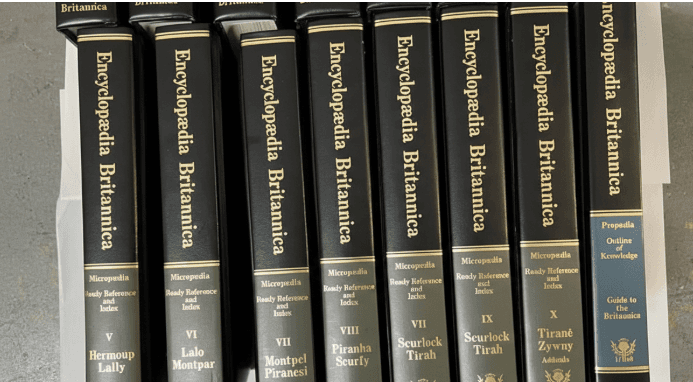
- Britannica is described in the complaint as a household name with over 250 years of history, now operating as a global digital education and information platform providing articles, videos, interactives, games, quizzes, and adaptive instructional solutions.
- Merriam‑Webster, owned by Britannica, is portrayed as America’s leading provider of language information for more than 180 years, operating popular websites and apps and publishing bestselling print dictionaries such as Merriam‑Webster’s Collegiate Dictionary.
Plaintiffs state they invest in human researchers, writers, and editors to create trusted, fact‑checked content. They fund that investment through subscriptions and advertising revenue driven by web traffic.
Defendants and Their Products
Plaintiffs name nine closely related Delaware entities that together operate as OpenAI, including OpenAI, Inc.; OpenAI LP; OpenAI GP, LLC; OpenAI, LLC; OpenAI OpCo LLC; OpenAI Global LLC; OAI Corporation, LLC; OpenAI Holdings, LLC; and OpenAI Group PBC.
The complaint characterizes OpenAI as “an AI research and deployment company” whose mission is to ensure AGI benefits all humanity. Plaintiffs cite OpenAI’s public materials stating ChatGPT is powered by large language models (LLMs) trained “on vast amounts of data from the internet written by humans” and that ChatGPT accesses the Internet to supplement its knowledge base and provide “better answer[s]” compared to traditional search.
Plaintiffs note OpenAI’s valuation at $730 billion and allege that ChatGPT‑based products (including consumer, business, enterprise offerings and OpenAI’s API) provide narrative text outputs using GPT‑3, GPT‑4, or subsequent LLM models and include functionality such as web search and deep research.
How Plaintiffs Say ChatGPT Harms Publishers
Plaintiffs allege that ChatGPT “free rides” on their high‑quality content by producing AI‑generated summaries and narrative responses that cannibalize traffic to Plaintiffs’ websites. The complaint explains the distinction between a traditional search engine (an intermediary that returns links and drives clicks to publishers) and ChatGPT, which allegedly delivers answers that substitute for the underlying publisher content and thereby divert subscription and advertising revenue.
Specifically, plaintiffs allege ChatGPT:
- Ingests and copies Plaintiffs’ copyrighted works at massive scale to train LLMs; and
- Uses retrieval‑augmented generation (RAG) and Internet access to supplement LLM knowledge bases with Plaintiffs’ content; and
- Generates outputs that contain verbatim or near‑verbatim reproductions, summaries, abridgements, or selections that mirror Plaintiffs’ content and curation.
Alleged Copyright Infringement
Plaintiffs assert three primary copyright claims:
- Mass‑scale copying to train LLMs: Plaintiffs allege OpenAI copied their copyrighted content to train models that produce outputs mimicking that content.
- RAG and retrieval copying: Plaintiffs allege OpenAI retrieves, copies, and uses Plaintiffs’ copyrighted content through RAG systems to supplement LLM knowledge bases.
- Infringing outputs: Plaintiffs allege ChatGPT generates outputs substantially similar to Plaintiffs’ works, including full or partial verbatim reproductions, paraphrases, summaries, and reproductions of curated lists and selections from Britannica.
Alleged Trademark and Lanham Act Violations
The complaint also alleges trademark violations under the Lanham Act. Plaintiffs claim ChatGPT sometimes generates fabricated content (“hallucinations”) and attributes those to Plaintiffs, or omits portions of Plaintiffs’ content without disclosure, presenting incomplete or inaccurate reproductions alongside Plaintiffs’ famous trademarks.
Plaintiffs allege such behavior gives rise to false designations of origin, confusion, and deception—leading users to believe hallucinations or undisclosed omissions are associated with, sponsored by, or approved by Plaintiffs.
Corporate Structure and Defendants’ Roles
The complaint describes the defendants as a web of affiliated Delaware entities, many sharing the same principal place of business at 3180 18th Street, San Francisco, California. Plaintiffs allege OpenAI Inc. indirectly owns and controls the other OpenAI entities and that those entities have been directly involved in the alleged large‑scale copyright and trademark violations.
Relief Sought
Plaintiffs seek to hold OpenAI liable for damages and to protect the public’s continued access to high‑quality, trustworthy online information. The complaint seeks remedies for the alleged copyright infringements and trademark violations and aims to stop the alleged ongoing harm to Plaintiffs’ businesses and reputations.
(Adapted from the plaintiffs’ complaint filed March 13, 2026, in Encyclopædia Britannica, Inc. and Merriam‑Webster, Inc. v. OpenAI et al., Civil Action No. 1:26‑cv‑2097.)
Sources:
Məxfiliyinizi qorumağa hazırsınız?
Doppler VPN-i yükləyin və bu gün təhlükəsiz baxışa başlayın.

Doppler VPN
Qeydiyyat tələb etməyən məxfilik-öncelikli VPN

Simnetiq
Dünya səyahətçiləri üçün qlobal eSIM məlumat
Doppler VPN
Qeydiyyat tələb etməyən məxfilik-öncelikli VPN
Simnetiq
Dünya səyahətçiləri üçün qlobal eSIM məlumat