Huawei challenges Nvidia with powerful new AI accelerator card
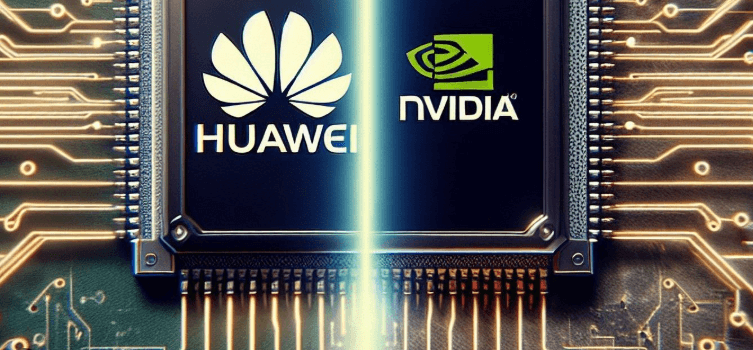
Huawei launches Atlas 350 AI accelerator card
Chinese tech giant Huawei Technologies has unveiled the Atlas 350 accelerator card for AI inference, powered by its Ascend 950PR chip. Announced at Huawei’s China Partner Conference, the company said the Atlas 350 delivers higher computing power for artificial intelligence applications and targets parity or better performance than US rival Nvidia’s H20 in inference tasks.
Key claims and figures
- The Atlas 350 delivers 1.56 petaflops of FP4 computing power, according to Huawei.
- Huawei says that represents a 2.8-times improvement over Nvidia’s China-tailored H20 chip (FP4 metric), as stated by Zhang Dixuan, head of Huawei’s Ascend computing business.
- Ma Haixu, a vice-president at Huawei, said the card is powered by the firm’s Ascend 950PR chip, designed to boost computing power and storage for AI inferencing.
FP4 refers to a low-precision floating-point format that lets accelerators move data faster, making it useful for inference workloads where throughput matters.
Target workloads and positioning
Huawei positioned the Atlas 350 as an inference-focused accelerator for use cases including:
- Search recommendation
- Multimodal generation
- Large language models (inference and related tasks)
Zhang Dixuan said the card aims to match or exceed peers in AI inference performance for those applications. An accelerator card is a dedicated hardware unit designed to be integrated into a server for specialised compute tasks.
Context: self-developed chips and US sanctions
Protect your privacy with Doppler VPN
Free. No registration. No logs.
The launch comes as the US-sanctioned company intensifies efforts in AI computing infrastructure based on its self-developed semiconductors. Huawei has invested in its Ascend AI chips and other chip breakthroughs in recent years to reduce reliance on American technology.
In September, Huawei unveiled the Ascend 950PR as part of a three-year roadmap for its Ascend ambition; the 950PR was described as being designed for prefill and recommendation — prefill being a fundamental step in AI model inference that ensures input tokens are efficiently processed.
Storage upgrades and broader hardware strategy
Alongside the Atlas 350 announcement, Huawei said it will make sweeping upgrades to its storage products in 2026. Planned updates and launches include:
- All-flash systems OceanStor Dorado and Pacific 9926 for enterprise-level storage
- FusionCube A1000 cabinet to enable quick AI deployment for small and medium-sized enterprises
Yuan Yuan, president of Huawei’s data storage product line, framed the company’s strategy: “While the first half of the AI era focused on computing power, the second half will be defined by data.” He said Huawei will continue upgrading its storage product lines in 2026 and remain closely involved with major national data infrastructure projects.
What this means
Huawei’s Atlas 350 — built around the Ascend 950PR — signals the company’s push to compete more directly with Nvidia in AI inference, particularly within China and for customers seeking non-US-dependent solutions. By emphasising FP4 performance and integrated storage upgrades, Huawei is addressing the increased compute and data demands of agentic AI systems that require both fast inference and substantial data handling.
Published: 9:00pm, 20 Mar 2026 | Iris Deng, Shenzhen
Sources:
Готові захистити свою приватність?
Завантажте Doppler VPN і почніть безпечний перегляд вже сьогодні.

Doppler VPN
VPN з пріоритетом приватності без реєстрації
Simnetiq
Глобальні eSIM-дані для мандрівників по всьому світу
Doppler VPN
VPN з пріоритетом приватності без реєстрації
Simnetiq
Глобальні eSIM-дані для мандрівників по всьому світу