Starlink Group 17-18:SpaceX 发射 25 颗 v2 Mini 卫星,Falcon 9 助推器尝试第七次回收
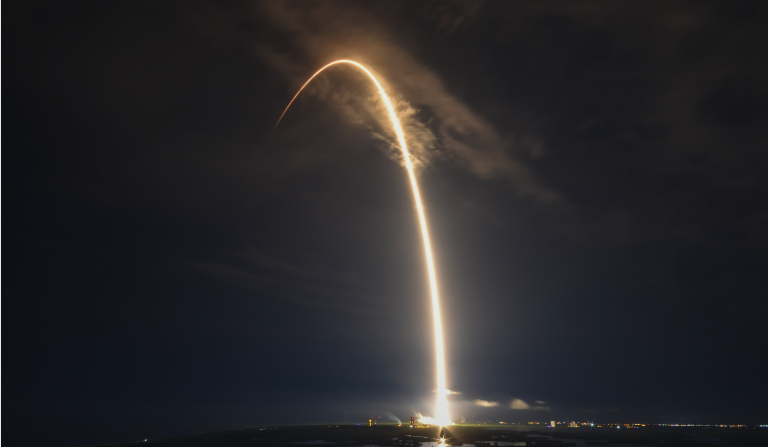
Starlink Group 17-18: Small sats, repeated boosters, sustained constellation growth
On March 8, 2026, at approximately 4:00 AM PT, SpaceX launched the Starlink Group 17-18 mission from Vandenberg Space Force Base in California. A Falcon 9 rocket lifted off from Space Launch Complex 4 East carrying 25 next-generation Starlink v2 Mini satellites aimed at expanding the company’s low Earth orbit (LEO) broadband constellation. The first stage booster, B1097, on its seventh flight, attempted a landing on the droneship "Of Course I Still Love You" in the Pacific. The payload was successfully deployed roughly one hour after liftoff.
Context and background
SpaceX’s Starlink program has been the most visible effort to build a commercial, global LEO broadband network. Over successive launches the company has progressively introduced iterations of satellite hardware, including the larger v1 and v2 platforms and now the smaller, more numerous v2 Mini vehicles. Vandenberg launches are typically used to populate orbital planes that provide higher-latitude coverage and reduce latency for certain regional footprints. This mission continues a high-cadence launch tempo designed to densify the constellation and improve service resilience.
Technical analysis
Payload: the v2 Mini approach
The 25 payloads aboard this flight were Starlink v2 Mini satellites — a scaled variant intended to balance cost, manufacturing throughput, and on-orbit performance. While SpaceX has not disclosed all technical specifics for this particular batch, the v2 Mini strategy broadly reflects an industry trend: distributing capacity across many smaller, cheaper satellites rather than fewer, larger, more capable platforms. That approach enables rapid iterative hardware improvements and incremental increases in regional capacity without risking the entire network to a single design flaw.
Deploying 25 satellites in one mission underscores how SpaceX is optimizing both launch manifest efficiency and constellation architecture. For customers, the immediate effect is improved regional throughput and redundancy; for SpaceX, more satellites per launch help accelerate global coverage targets and improve mesh-like routing across LEO.
Reusability and booster operations
Booster B1097’s seventh flight is another milestone in SpaceX’s reuse program. Frequent reflights improve per-launch economics but also place operational emphasis on inspection, refurbishment, and test regimes. The reported attempt to land on the "Of Course I Still Love You" droneship highlights how at-sea recovery remains integral to the Falcon 9 operational model. The mission summary notes the landing was attempted; absent public confirmation of success, the attempt itself still signals robust operational cadence and the logistical complexity of repeated maritime recoveries.
Launch cadence and constellation strategy
Launching from SLC-4E at Vandenberg facilitates insertion into orbital inclinations that complement SpaceX’s broader LEO architecture. This mission’s timing and payload complement other Starlink deployments intended to fill orbital planes that improve service availability over mid- and high-latitude regions. The roughly one-hour time from liftoff to deployment is consistent with the orbital maneuvers needed to reach the designated insertion plane and sequencing for multi-satellite release.
Competitive and industry implications
使用 Doppler VPN 保护您的隐私
3 天免费试用。无需注册。无日志。
SpaceX’s pace of launches continues to raise the bar for commercial satellite broadband. Competitors like OneWeb and Amazon’s Project Kuiper are advancing their own constellations, but SpaceX’s combination of launch frequency, satellite iteration, and in-house launch capability offers a durable advantage. The v2 Mini model may also influence industry norms, encouraging other operators to consider higher-volume, lower-cost satellite designs to rapidly scale networks.
Regulatory and spectrum coordination pressures will grow as constellations densify, and debris mitigation and collision avoidance will remain central operational challenges. Continued success will depend on effective space traffic management practices and cooperation with other operators and regulators.
Outlook
Starlink Group 17-18 is a clear incremental step toward a fuller, more resilient Starlink network. The combination of smaller, rapidly mass-produced satellites and a reusable launch vehicle fleet gives SpaceX flexibility to iterate on hardware and expand capacity rapidly. Over the next 12–24 months expect continued launches focused on densification, additional regional coverage improvements, and further refinements to satellite and ground service performance.
The mission also underlines the economics driving modern satellite internet — frequent launches, reusable boosters, and modular satellite classes. That model will likely shape competitive dynamics and regulatory attention as the LEO broadband market matures.
Stay connected and browse safely with Doppler VPN.