Nvidia halts H200 production as China backs Huawei AI chips
Nvidia halts H200 production as China backs Huawei AI chips
by Jeff Pao — March 10, 2026
China’s rapid advance in high-bandwidth memory tech suspiciously coincided with repeated trade-secret leaks from SK Hynix, and now Nvidia has reportedly halted production of its H200 artificial-intelligence (AI) chips intended for China amid rising US‑China tensions and Beijing’s policy of supporting domestic chips.
Production halt and reallocation at TSMC
According to a Financial Times report citing two people familiar with the situation, Nvidia has reallocated manufacturing capacity at Taiwan Semiconductor Manufacturing Company (TSMC) away from producing H200 chips and toward its next‑generation Vera Rubin hardware. The decision reflects Nvidia's move to avoid remaining in regulatory limbo between the United States and China and to focus on products with clearer market prospects, especially as demand for its most advanced chips remains strong.
H200 exports approved then blocked by Chinese authorities
The U.S. signaled limited openness to H200 exports for civil use when President Donald Trump said on December 8 that Washington would allow exports of the H200 chips to China. Media reports at the time said Chinese internet giants Alibaba, Tencent and ByteDance were seeking to purchase 400,000 units.
After Trump formally approved limited H200 exports on January 13, Chinese customs authorities informed Nvidia that the chips would not be allowed to enter the country. Beijing later fine‑tuned that position by saying Chinese companies can purchase the H200 but should consider local chips first. As of now, no H200 chips have been sold to Chinese customers, according to US officials.
HGX H200 platform and its role
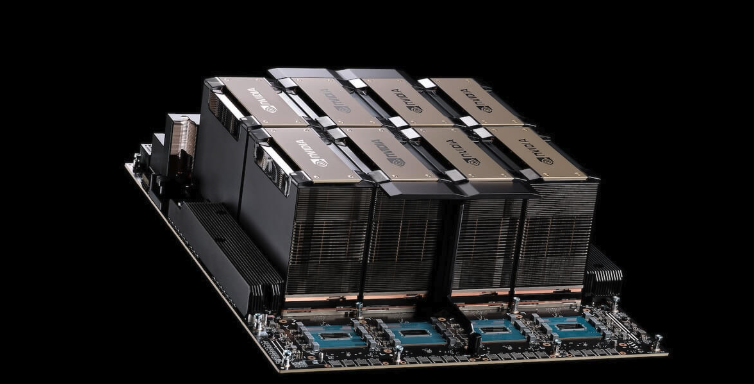
The HGX H200 platform — based on Nvidia’s Hopper architecture — features the H200 Tensor Core GPU with advanced memory designed to handle massive datasets for generative AI and high performance computing workloads. The H200 was positioned as a training-class chip for large AI models, while some observers expected domestic chips to be used for inference tasks.
Chinese commentary and geopolitical backdrop
Some Chinese commentators linked Beijing’s decision to curb H200 imports to broader geopolitical tensions, including the United States’ interception of 1.8 million barrels of Venezuelan oil destined for China on December 20. Xia Yuanqi, a Shanghai‑based columnist, wrote that the tanker interception was less about the oil and more about demonstrating US law enforcement power.
Commentators cited in the report noted the symbolic and economic stakes: one observer pointed out that while the seized crude might be worth over a billion dollars, Nvidia’s H200 chips are far more valuable per unit. “Nvidia wanted Chinese firms to buy its H200 chips. It definitely felt the pressure,” the commentator said.
Another writer argued that China’s chip technology has advanced rapidly in the past two years and that Beijing now holds strategic levers such as rare earths. “The US wants to use the H200 chips to squeeze the final profits from China, but the Chinese market has changed. The global supply of AI computing power has also been diversified,” the Guizhou‑based writer wrote.
Reaction in Chinese media and industry expectations
Chinese media and commentators had earlier welcomed the prospect of Nvidia’s H200 chips entering the Chinese market, suggesting the H200 would be used for training AI models such as DeepSeek while domestic chips would handle inference. The evolving regulatory stance from Beijing, however, and Nvidia’s subsequent production reallocation underscore how geopolitics and industrial policy are reshaping the AI‑chip market.
What this means
Nvidia’s reported halt of H200 production for China and the shift of TSMC capacity to Vera Rubin hardware reflect a recalibration driven by regulatory uncertainty and market strategy. Beijing’s push for domestic chips, the fine‑tuned import guidance, and vocal commentary tying trade decisions to broader geopolitical incidents have combined to complicate Nvidia’s path into the Chinese market.
(Reported by Asia Times and Financial Times; original reporting by Jeff Pao.)
Sources: