OpenClaw, AI Agents, and What Their Rise Means for Privacy
Introduction
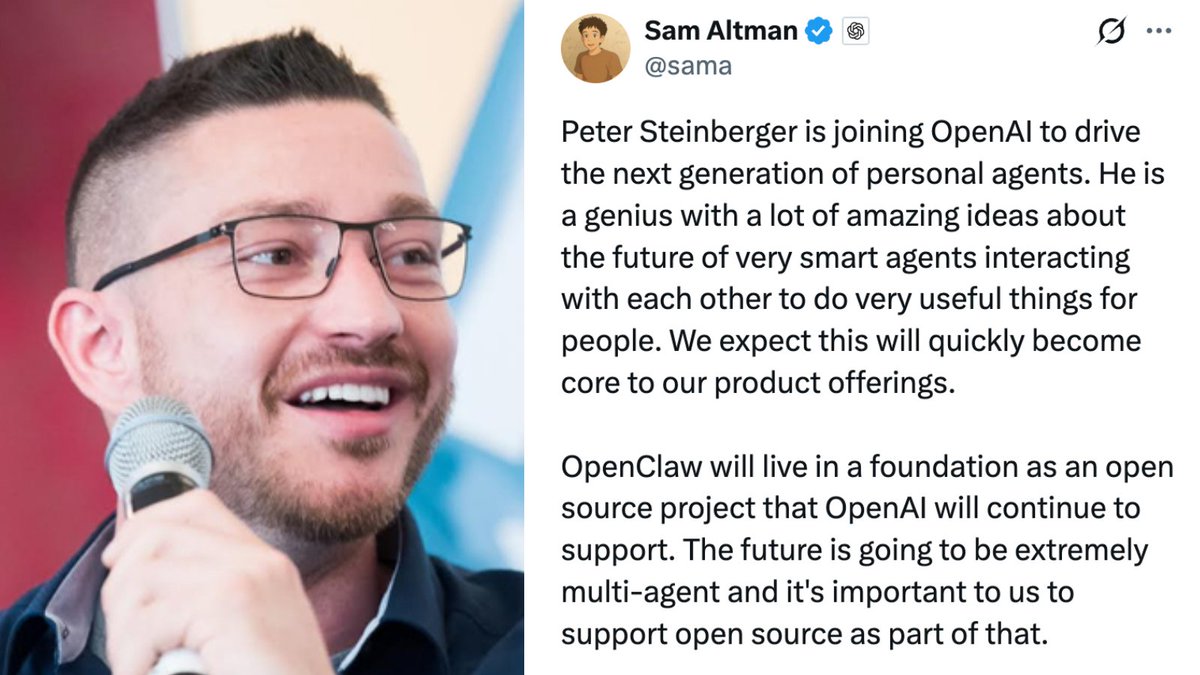
The recent announcement that Peter Steinberger — creator of the viral AI agent OpenClaw — is joining OpenAI and that OpenClaw will be maintained as an open-source project inside a foundation has renewed attention on autonomous AI agents. These agents can automate tasks, log into services, and act on users’ behalf. That capability presents huge potential for productivity, but it also raises serious privacy and security questions for both individuals and organizations.
This article unpacks the risks AI agents introduce, explains why open-source distribution is a double-edged sword, and lays out practical technical and operational defenses. We also describe how a VPN, including Doppler VPN, fits into a layered security strategy when you experiment with or deploy AI agents.
What are AI agents and why they matter
AI agents are software systems that take autonomous actions for users: scheduling meetings, managing email, interacting with web services, and chaining together APIs to complete multi-step tasks. They differ from single-query models because they can maintain state, plan sequences of actions, and execute interactions with external systems.
The result: agents can dramatically speed workflows and enable new product experiences. But granting an agent the ability to access accounts, click links, or transact on your behalf creates an expanded attack surface that must be secured.
Why open-source agents are both powerful and risky
Protect your privacy with Doppler VPN
3-day free trial. No registration. No logs.
Open-source projects accelerate innovation by enabling community inspection, modification, and integration. They also make it easier for researchers and smaller teams to build useful agents quickly. OpenClaw’s rapid spread — including adoption paired with non-English language models and integrations with regional platforms — illustrates this advantage.
At the same time, openness allows anyone to fork, modify, and redistribute agents. That can introduce several hazards:
- Malicious forks that add covert exfiltration or unwanted behaviors.
- Unvetted third-party integrations that introduce insecure dependencies.
- Rapid proliferation of versions without consistent security controls or auditing.
Open-source governance — even inside a foundation hosted by a big company — helps, but it does not eliminate risks. Responsible disclosure, code signing, and clear permission models are essential.
Key privacy and security threats from AI agents
AI agents increase and change traditional risk vectors. Major concerns include:
- Credential exposure: Agents often require tokens or account access. Poorly secured tokens can lead to account takeover.
- Automated social engineering: Agents can generate targeted messages or perform actions at scale, amplifying phishing and fraud.
- Data exfiltration: Agents with broad access can scrape or leak personal and corporate data to external services or repositories.
- Lateral movement: An agent that’s allowed into one system can be a stepping stone to other internal resources if permissions aren’t tightly scoped.
- Supply-chain attacks: Malicious or compromised dependencies used by an agent can introduce vulnerabilities.
- Metadata leakage: Network-level information (IP, DNS queries, geolocation) can reveal behavior patterns and user identity, even when payloads are encrypted.
- Cross-border legal risks: Deploying and integrating agents across jurisdictions (for example, pairing with regional LLMs) introduces compliance challenges around data residency and export controls.
Practical mitigations and best practices
Mitigating agent risks requires both technical controls and governance. Key recommendations:
-
Least privilege and scoped tokens
- Grant agents only the exact permissions they need. Use short-lived, narrowly scoped tokens and require explicit reauthorization for additional scopes.
-
Sandboxing and isolation
- Run agents in isolated execution environments to limit damage from misbehaving or malicious code.
-
Secrets management
- Keep credentials and API keys out of agent code. Use dedicated secrets stores and rotate secrets frequently.
-
Strong authentication and MFA
- Protect backing accounts with multi-factor authentication and hardware-backed keys where possible.
-
Code auditing and reproducible builds
- Require code review, provenance checks, and signed releases for any agent you put into production.
-
Monitoring and observability
- Log agent actions, maintain immutable audit trails, and set alerts for anomalous behaviors.
-
Rate limiting and activity controls
- Apply throttles to agent-driven actions to limit abuse and to detect automated attack patterns.
-
Governance and policy
- Define clear policies for which agents can be used, by whom, and under what conditions. Incorporate legal and privacy reviews for cross-border integrations.
Where a VPN fits in your defense-in-depth
A VPN is not a silver bullet against agent misuse — it cannot stop a malicious agent that has valid credentials or narrow code-level defects — but it is an important protective layer for many attack scenarios. Here’s how a VPN contributes:
-
Encrypts network traffic: When agents interact with external services or APIs, a VPN protects traffic on public or untrusted networks from interception.
-
Masks IP and location metadata: Hiding your real IP makes it harder to correlate agent activity with a specific user or network footprint.
-
Reduces MITM risk: Strong VPN encryption and verified server endpoints diminish man-in-the-middle risks when an agent reaches out to web services.
-
Centralizes egress points for monitoring: For organizations, funnelling agent traffic through managed VPN endpoints makes it easier to apply logging, IDS/IPS, or additional inspection.
-
Supports safe testing: When experimenting with new open-source agents, using a VPN adds a straightforward layer of protection for development machines and test environments.
Doppler VPN can play this role as part of a layered approach: secure, no-logs tunneling and multi-region servers reduce exposure of metadata and improve the safety of agent testing and everyday use. Remember, VPNs should be combined with strong secrets management, MFA, and environment isolation to be truly effective.
Practical checklist for users and teams
- Treat agents like third-party apps: apply the same review and approval processes
- Use ephemeral, least-privilege tokens and rotate them frequently
- Run agents in isolated or sandboxed environments before granting production access
- Protect developer and user devices with VPNs when testing or remotely accessing services
- Maintain audit logs of agent actions and review them regularly
- Limit integrations to vetted, signed libraries and maintain a software bill of materials (SBOM)
Conclusion
AI agents like OpenClaw are reshaping how we work, surfacing efficiency gains that were previously hard to automate. Their openness and autonomy bring new privacy and security challenges as they gain access to accounts, data, and external systems. The right response is not to halt innovation but to apply layered defenses: least-privilege access, sandboxing, secrets management, governance and monitoring — and network protections such as a VPN.
Using a reliable VPN like Doppler VPN while experimenting with or deploying agents reduces network-level risk and metadata exposure, but it must be paired with other controls to manage credential and code-level threats. As AI agents continue to evolve and integrate across platforms and regions, organizations and individuals should treat them with the same scrutiny and security rigor given to any powerful software component.
Stay proactive: evaluate agents before adoption, lock down permissions, and use tools — including VPNs — to keep data and networks secure as this next generation of AI tooling becomes core to everyday products and workflows.