Samsung Galaxy Unpacked 2026: Agentic AI, Gemini 3 Preview, and On‑Device Privacy
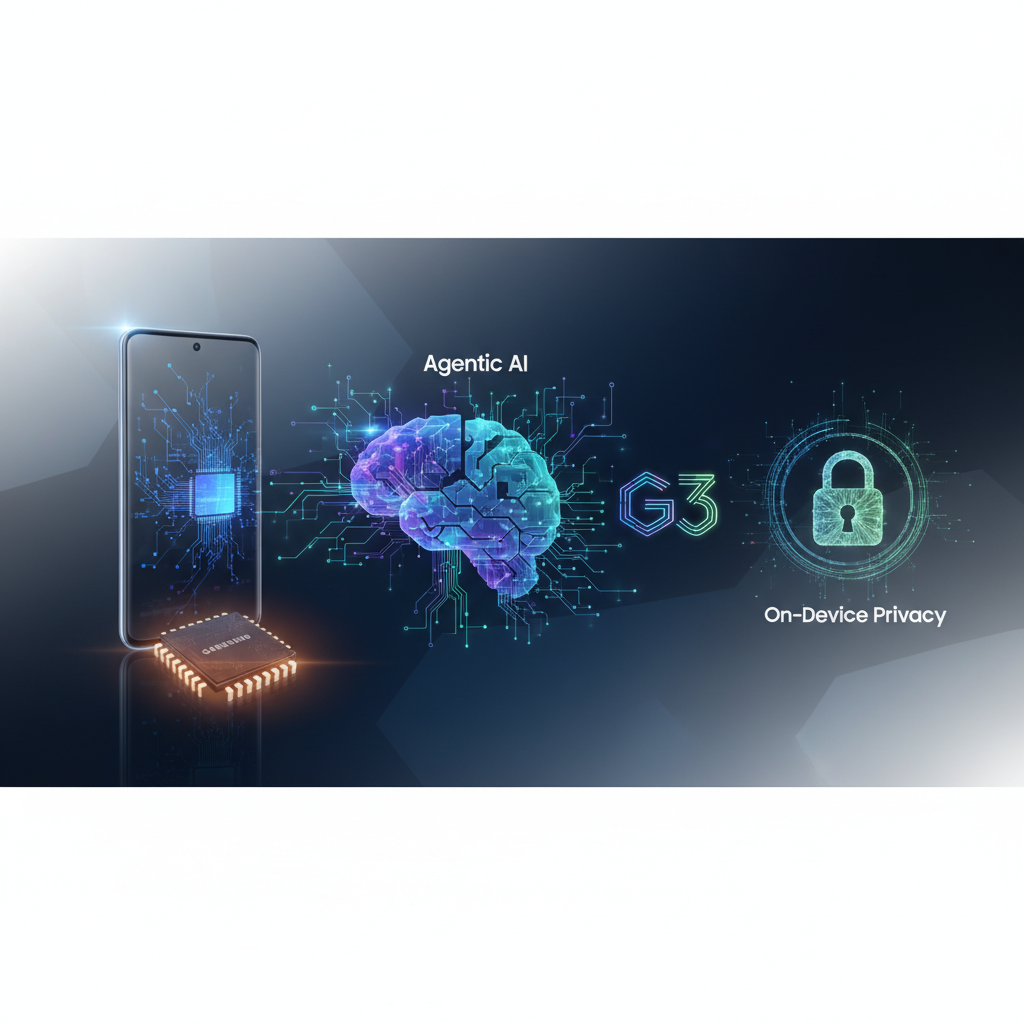
Agentic AI moves from demo to daily use
Samsung Electronics unveiled the Galaxy S26 series and Galaxy Buds4 series at Galaxy Unpacked 2026 in San Francisco on February 25 [1]. The headline was not just faster silicon or finer cameras; it was a clear push to make agentic AI feel like a natural part of everyday phone use rather than a lab experiment [1]. As TM Roh framed it, transformative tech becomes infrastructure when it stops being extraordinary and simply works for people [1].
Expanded visual search and context-aware assistance
A central software highlight was an expanded Circle to Search capability that can identify multiple objects in a scene and act on them, bringing more contextual utility to photography and shopping workflows [1]. These are the sorts of micro-interactions — point, ask, act — that demonstrate the difference between impressive demos and frictionless features that users reach for habitually.
A Google-powered preview: Gemini 3 on Galaxy
Protect your privacy with Doppler VPN
3-day free trial. No registration. No logs.
Samsung also previewed Android’s next evolution on the Galaxy S26, powered by Google’s Gemini 3, arriving for Galaxy S26 users initially as a Google Labs feature [1][2]. The partnership signals deeper OS-level cooperation: Samsung supplying hardware and UX polish while Google provides a generative AI model tuned for on-device context. That split — device as platform, model as capability — is the new collaboration model in mobile AI.
Privacy and control at the surface level
Privacy received explicit attention during hands-on demos. Reviewers highlighted Privacy Display on the S26 Ultra as a practical toggle for hiding sensitive on-screen data in public; content creator Kara Lewis noted how quickly it lets someone obscure bank details or other private information while on the move [1]. These are incremental but important trust features — small defaults and visible controls that reduce user anxiety about AI and shared contexts.
What this means for the device market
Samsung’s framing was familiar: close the gap between AI’s promise and day-to-day utility. The combination of agentic features, visual multi-object search, and a preview of Gemini 3 shows competition is shifting from raw model size to orchestration: how the device routes tasks between on-device models, cloud services, and partner models.
Product and capability comparison
Practical advice: what users and businesses should do now
- Individuals: enable and test the Privacy Display on public commutes; review app permissions for camera and microphone to limit unexpected data flows. Use a reputable VPN on public Wi‑Fi when authenticating to banking or other sensitive services.
- Small businesses: pilot Galaxy S26 devices for staff who handle sensitive client data and document whether on-device privacy features reduce exposure during field work. Update mobile device policies to include AI-feature awareness and data-handling rules.
- IT and security teams: map where agentic AI features route requests (on-device vs. cloud) and adjust enterprise mobile management policies accordingly. Confirm contractual terms with Google and Samsung for data residency and telemetry if devices will be used with regulated data.
- Product teams: treat AI features as UX problems. Measure task completion and time-to-action, not just model accuracy. Small agentic moves that save seconds will drive adoption.
Bottom line
Galaxy Unpacked 2026 was less about a single headline device and more about stitching AI into the visible fabric of the phone: multi-object visual search, agentic assistants, a Google-model preview, and practical privacy toggles. Samsung is betting that usability — not just capability — decides which AI features become invisible infrastructure and which stay curiosities [1][2].
Sources: